
Overview
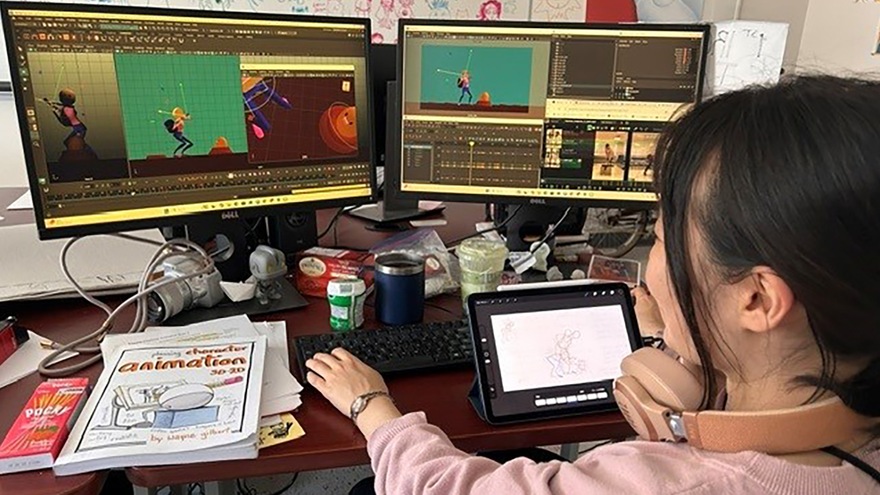
Transform imagination into compelling visual stories through the art of 3D animation. Develop industry-ready skills in character animation, visual development, cinematic storytelling, project management and storyboarding using industry software MAYA. Produce a 3D animated short film that showcases your creativity and technical expertise for careers in film, television, and video games.
What you will learn
Upon successful completion of this program, graduates will be able to:
- Demonstrate industry-ready skills as an entry-level 3D animator for careers in the feature film, television, and video game industries.
- Demonstrate industry-ready skills as an entry-level storyboard artist for the feature film, television and video game industries.
- Create a 3D animated short film or series of exercises that showcase mastery of the technical and creative skills developed throughout the program.
- Develop and explore visual concept options to effectively communicate and deliver ideas, characters and narratives.
- Create compelling cinematic visuals that support storytelling through effective use of composition, lighting, and editing.
- Develop and present engaging and cohesive stories through animation.
- Apply project management strategies to plan, track, and successfully complete complex animation projects within deadlines.
What to expect
Students gain hands-on experience in a classroom environment that replicates a professional animation studio, working within authentic production schedules and creative review processes.
Technical animation training is complemented by supporting studies in life drawing, visual language, storytelling, and animation history, emphasizing the integration of artistic fundamentals with digital production skills.
There will be self-directed and collaborative team and client projects, hands-on labs, production simulations, problem solving exercises, interactive lectures and demonstrations.
Students are evaluated through a combination of practical assignments and projects, portfolio development, client project work, presentations, written assignments and lab work. Class participation and professional conduct are assessed throughout the program as a reflection of professional studio environments and industry standards.
The program requires extended periods of computer use with sustained visual focus on digital displays, including Virtual Reality headsets.
Admission requirements
- Admission to this program is through a selection process. Admission requirements include:
- Grade 12 graduation or equivalent
- English 11 or equivalent
- Letter of intent (a one-page personal statement detailing educational/work background, career goals, passions, and reasons for choosing this program)
- Portfolio consisting of 12 examples of best artwork (minimum 5 pieces of life drawing)
Missing prerequisites? Learn more about VCC's tuition-free in academic upgrading, university transfer or English as a Second Language (ESL) Courses.
Fees and other costs
| Fee description | Fee Amount | Notes |
|---|---|---|
| Tuition | $26,915 | |
| College initiative | $94 | |
| Campus resource | $540 | |
| Application | $36 | |
| Student Union | $137 | |
| Medical & Dental | $285 | |
| U-Pass | $368 | |
| Graduation | $45 | |
| Total | $27,825 |
Need help with tuition?
Explore your options for scholarships, grants, bursaries, and loans.
* Fees are approximate and subject to change with the approval of VCC's Board of Governors. Students are required to pay any applicable fee increases. Application and assessment fees are non-refundable.
Any refunds are issued according to VCC's refund policy.